When buying a home, most people focus on two numbers: the purchase price and the down payment.
However, many buyers are surprised to learn that the amount of money needed on closing day is often different from the down payment alone.
This is where the term cash to close comes into play.
Whether you're purchasing your first home in Rockford, Loves Park, Machesney Park, Roscoe, Rockton, Belvidere, or elsewhere in Winnebago County, understanding cash to close can help you avoid surprises and better prepare for homeownership.
Cash to close is the total amount of money you need to bring to closing in order to complete your home purchase.
Your cash to close typically includes:
Down payment
Closing costs
Prepaid expenses
Escrow deposits
It may be reduced by:
Earnest money deposits
Seller credits
Lender credits
Other eligible adjustments
Understanding these costs early can help you budget more effectively and move through the homebuying process with confidence.
Cash to close, sometimes called funds to close, is the total amount of money required to finalize your home purchase.
Think of it as the final amount needed to officially receive the keys to your new home.
The exact amount varies depending on:
Purchase price
Loan type
Down payment
Property taxes
Insurance costs
Closing costs
Credits received during the transaction
Your lender will provide a Closing Disclosure that outlines your final cash to close amount before closing day.
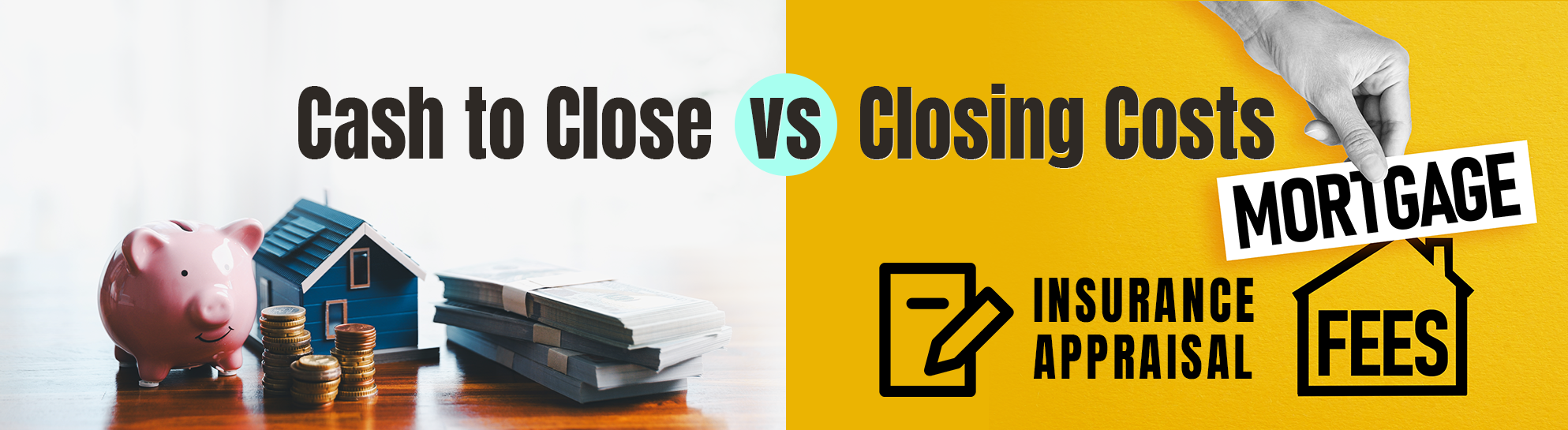
Cash to Close vs. Closing Costs
Many buyers mistakenly believe these terms mean the same thing.
They don't.
Closing Costs
Closing costs are the fees associated with completing the transaction.
Examples include:
Appraisal fees
Loan origination fees
Title services
Recording fees
Credit report fees
Underwriting fees
Title insurance
In many transactions, closing costs total between 2% and 5% of the purchase price.
Cash to Close
Cash to close includes your closing costs, but it also includes:
Down payment
Prepaid expenses
Escrow funding requirements
After credits and deposits are applied, the remaining amount becomes your final cash to close.
In simple terms:
Closing costs are part of your cash to close amount.
What Makes Up Your Cash to Close?
Several items contribute to the final amount you'll need at closing.
Down Payment
For many buyers, the down payment represents the largest portion of their cash to close.
Examples include:
Conventional loans: Often 3% to 20% down
FHA loans: As little as 3.5% down for qualified buyers
VA loans: Often no down payment for eligible veterans
USDA loans: Often no down payment for eligible rural properties
The amount varies depending on the loan program and your individual situation.
Closing Costs
These one-time fees are necessary to complete the purchase.
Common examples include:
Appraisal fees
Loan fees
Title insurance
Recording fees
Transfer fees
Escrow fees
HOA fees (when applicable)
The exact costs vary depending on the lender, property, and transaction details.
Prepaid Expenses
Certain expenses are collected upfront at closing.
These may include:
Homeowners insurance
Property taxes
Mortgage interest
Escrow account funding
These funds help ensure important homeownership expenses are paid on time after closing.
Credits and Deposits
Some costs may already have been paid or credited during the transaction.
Examples include:
Earnest money deposits
Seller concessions
Lender credits
Appraisal fees paid in advance
These amounts are generally deducted from the final cash to close figure.
A Simple Cash to Close Formula
Most transactions follow a formula similar to this:
💰Cash to Close = Down payment + Closing costs + Prepaid expenses – Credits and deposits
While the exact calculations vary from one transaction to another, this formula provides a good starting point for understanding how lenders arrive at the final number.
Cash to Close Example
Let's look at a simplified example.
Example Home Purchase
Purchase Price: $200,000
Down Payment (5%): $10,000
Closing Costs: $5,000
Prepaid Expenses: $2,000
Earnest Money Deposit: $1,000
Seller Credit: $2,000
Estimated Cash to Close:
$10,000 + $5,000 + $2,000 - $1,000 - $2,000
Estimated Cash to Close: $14,000
Actual amounts vary, but examples like this can help buyers understand how the numbers work together.
How VA Loans Can Affect Cash to Close
For eligible veterans, VA loans can significantly reduce the amount of cash needed at closing.
Potential advantages include:
No down payment requirement
Limited closing costs
Seller concessions
Competitive financing terms
While buyers may still have closing costs and prepaid expenses, eliminating the down payment requirement can substantially reduce the cash needed to complete the purchase.
Veterans considering a home purchase in Northern Illinois should explore how VA financing may impact their overall affordability.
Cash to Close in Rockford and Winnebago County
One advantage of buying a home in Rockford and the surrounding communities is affordability compared to many larger Illinois housing markets.
Because home prices are often lower than in major metropolitan areas, buyers may find that both their down payment and cash-to-close requirements are more manageable.
However, buyers should still plan for:
Property taxes
Insurance costs
Closing expenses
Escrow requirements
Understanding these expenses early can help prevent last-minute surprises and reduce stress during the final stages of the transaction.
When Will I Know My Final Cash to Close Amount?
Your lender is required to provide a Closing Disclosure before closing.
This document outlines:
Loan terms
Closing costs
Credits
Cash to close
Reviewing this document carefully is important because it contains the final numbers used to complete your transaction.
If anything appears different than expected, ask questions immediately so concerns can be addressed before closing day.
Final Thoughts
Understanding cash to close is one of the most important parts of preparing to buy a home.
While many buyers focus primarily on the down payment, closing costs, prepaid expenses, and escrow funding requirements can significantly impact the total amount needed at closing.
By planning ahead and understanding how these costs work together, you'll be better prepared when it's time to finalize your purchase and receive the keys to your new home.
Frequently Asked Questions
Is cash to close the same as closing costs?
No. Closing costs are only one component of your total cash to close amount.
How much cash do I need to close on a house?
The amount depends on the purchase price, loan program, down payment, closing costs, prepaid expenses, and credits received during the transaction.
Can seller credits reduce my cash to close?
Yes. Seller credits can often lower the amount of money you need to bring to closing.
Do VA loans reduce cash to close?
For many eligible veterans, VA loans can significantly reduce cash to close because they often do not require a down payment.
When will I know my final cash to close amount?
Your lender will provide a Closing Disclosure before closing that outlines your final cash to close requirement.
Can I use gift funds toward cash to close?
In many loan programs, gift funds may be permitted. Speak with your lender to understand the rules that apply to your situation.